Struggling to turn followers into customers.
“I built a large audience in my niche, but I’m having trouble monetizing them.”
— JD (the client)I worked with a CrossFit coach to design and build a quiz-based sales funnel.
The business had grown through Instagram, building an audience of engaged followers. But converting those followers into paying customers relied on manual processes.
The gap between follower and paying customer was inefficient and time-consuming.
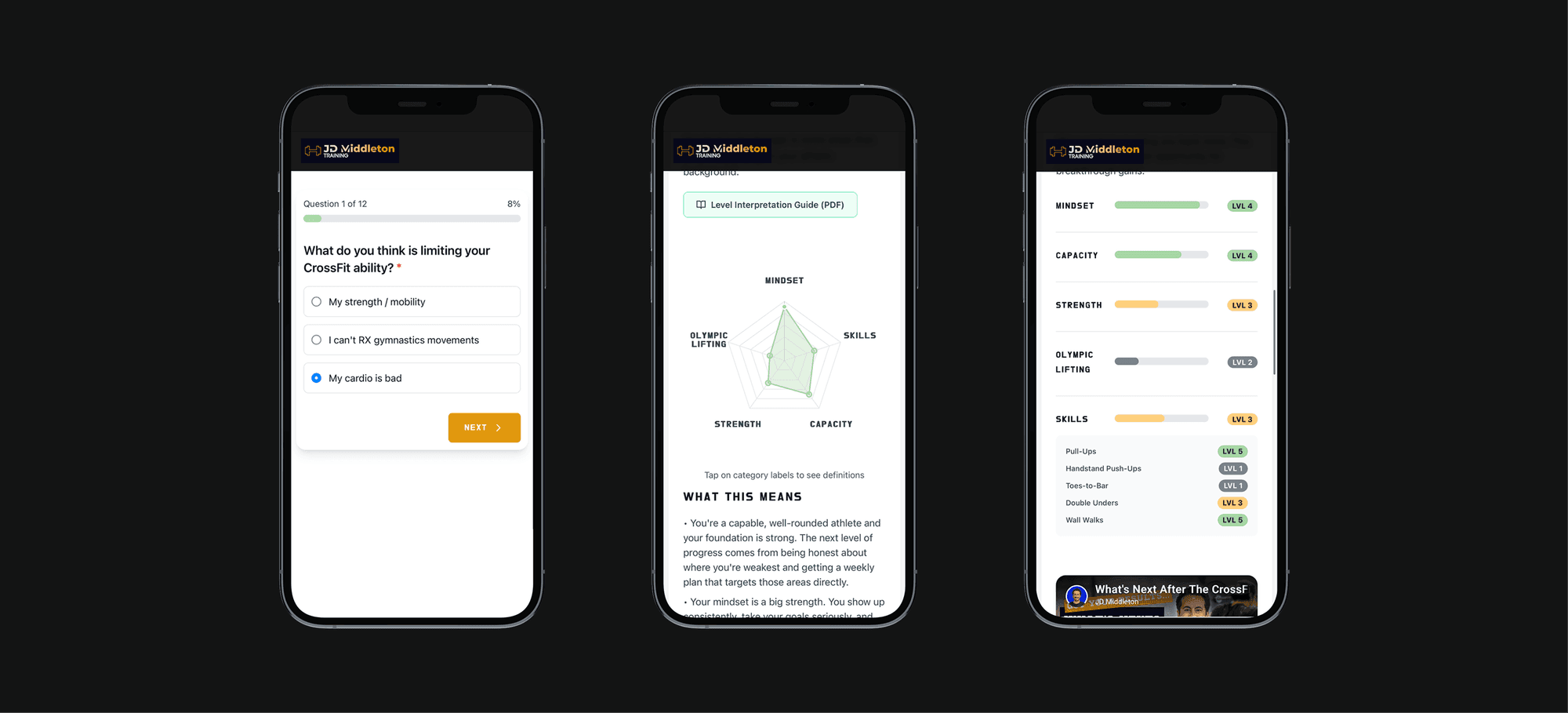
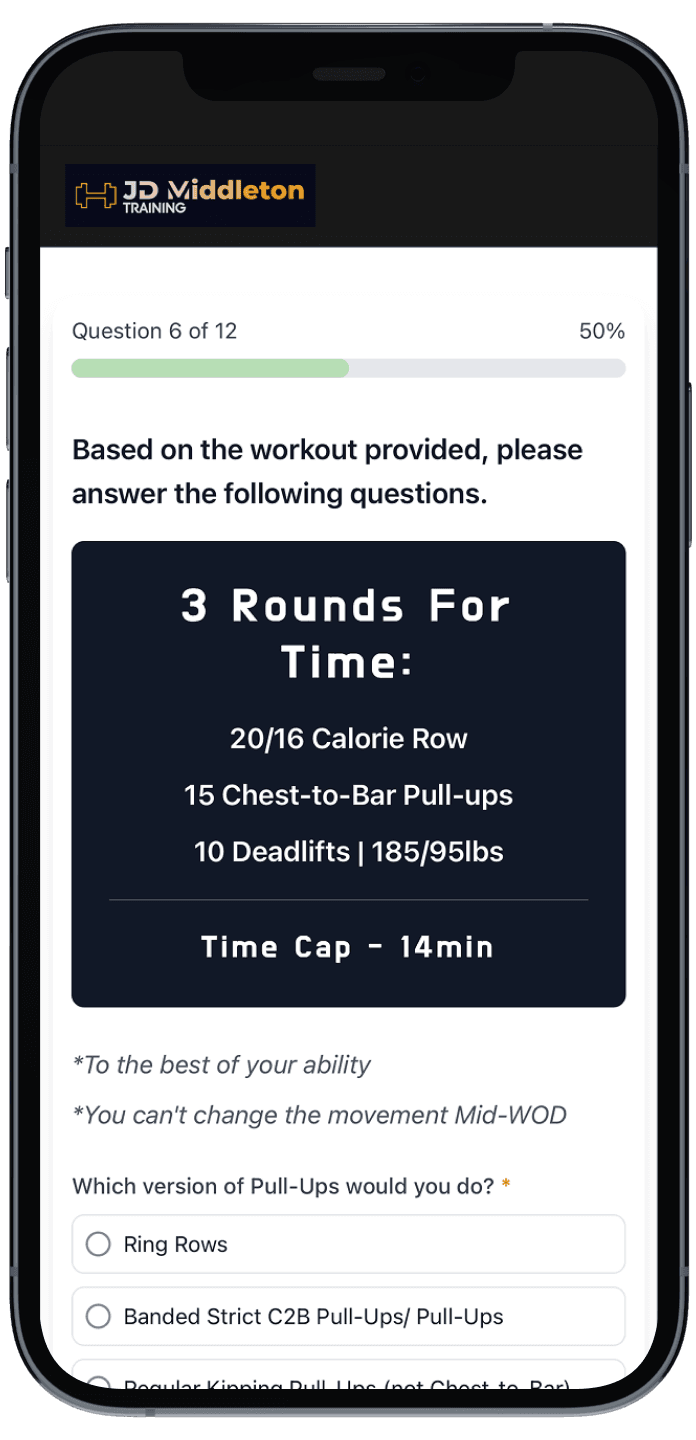
JD needed an engaging way to go from follower to customer. People like to take quizzes, and JD’s followers are a niche audience who can take the quiz to learn more about their unique interests. A quiz allows us to:

Why A Quiz?
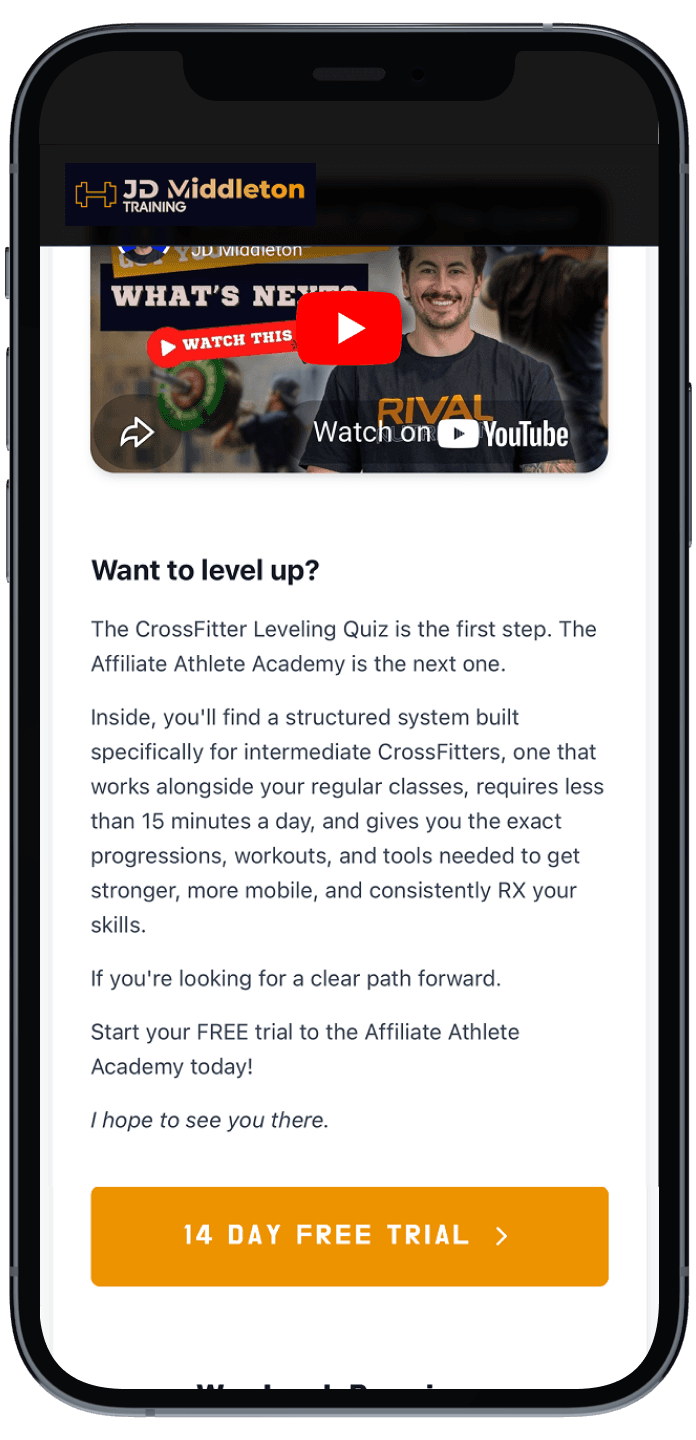
Quizzes turn passive followers into active participants. They create a quick, personalized experience that builds investment, while helping users self-identify their needs.
It makes the final offer feel relevant and easier to buy into.
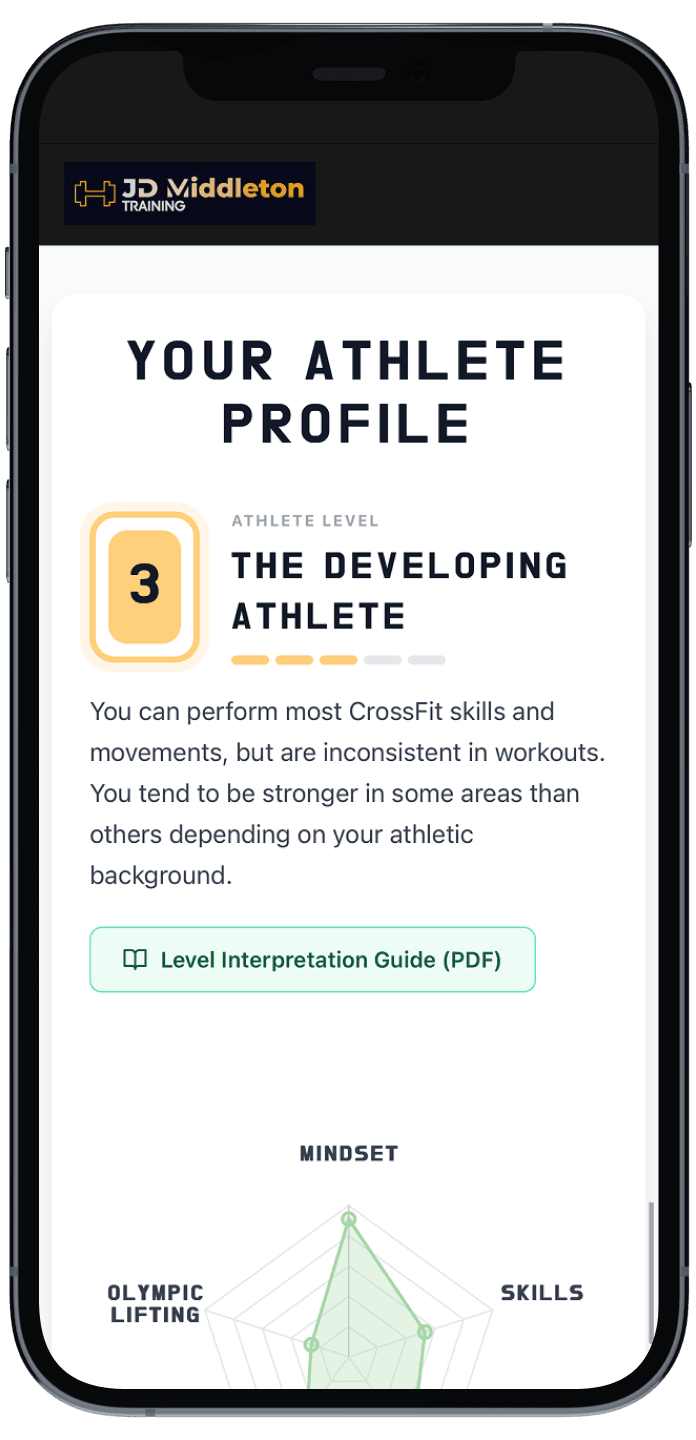
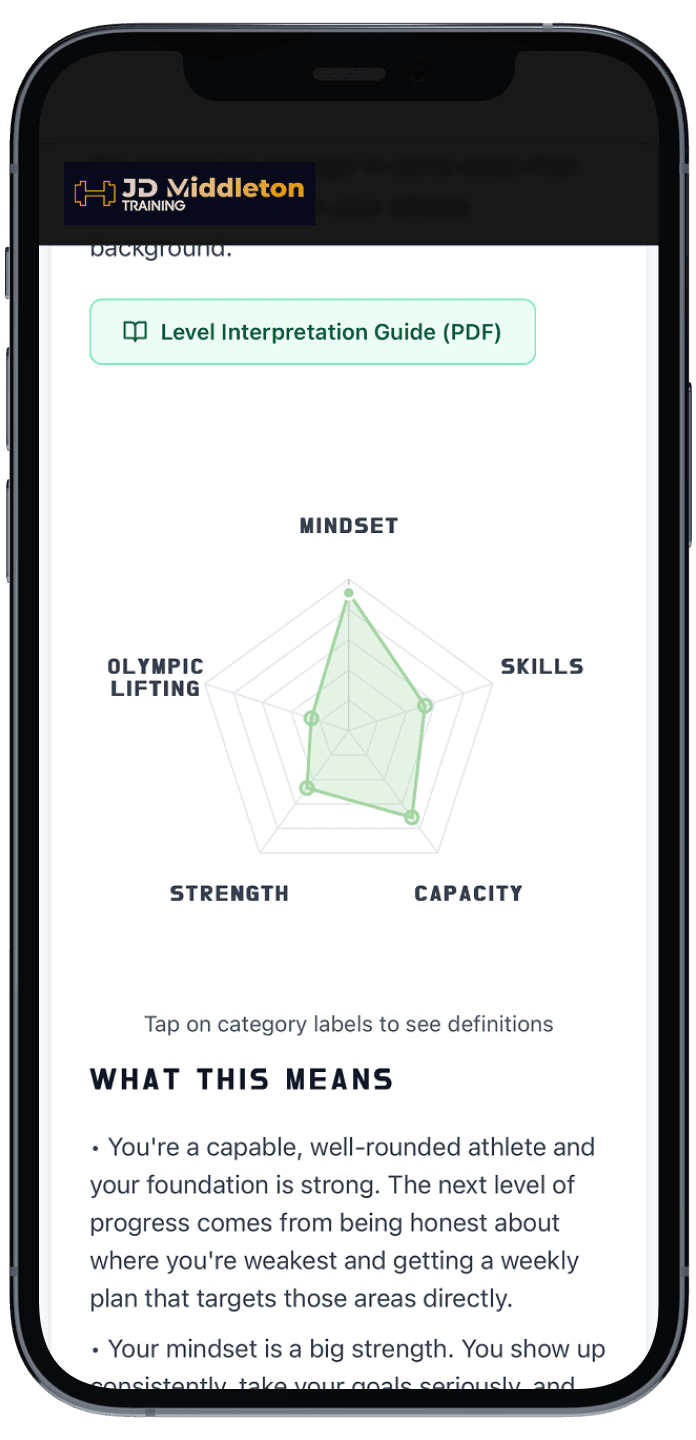
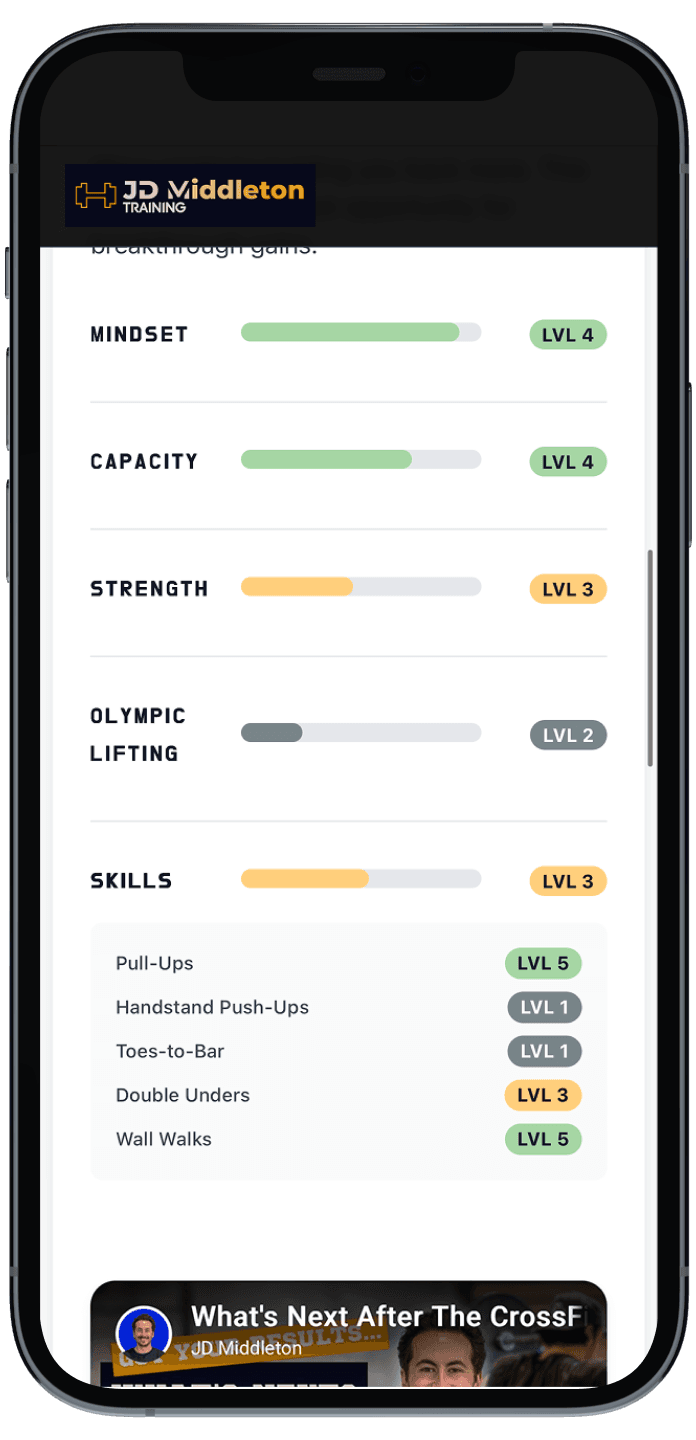
Between the client and myself, we brought over a decade of CrossFit coaching experience. We used that to define what different levels of athletes actually look like in practice.
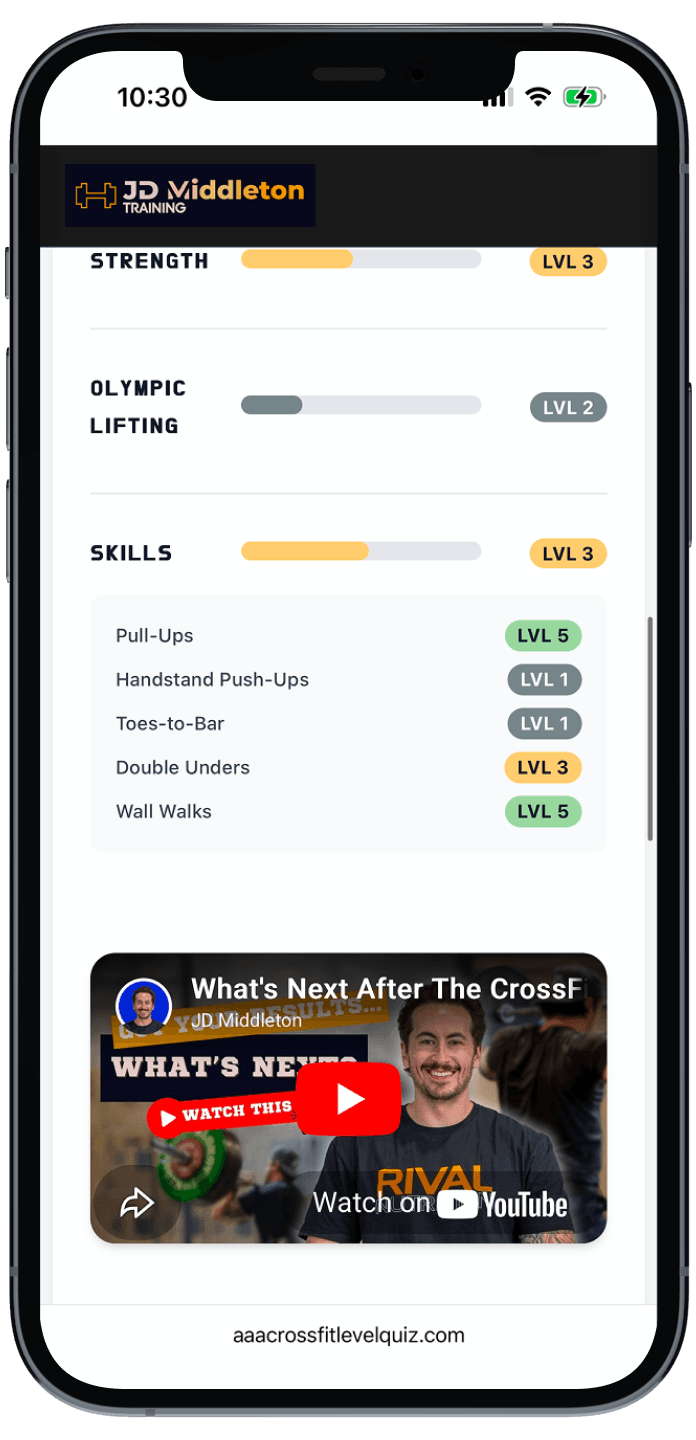
We translated those mental models into measurable benchmarks and scoring logic.
As the quiz evolved, the scoring system became more complex. Getting this right required understanding how the logic should work and shaping the system accordingly.
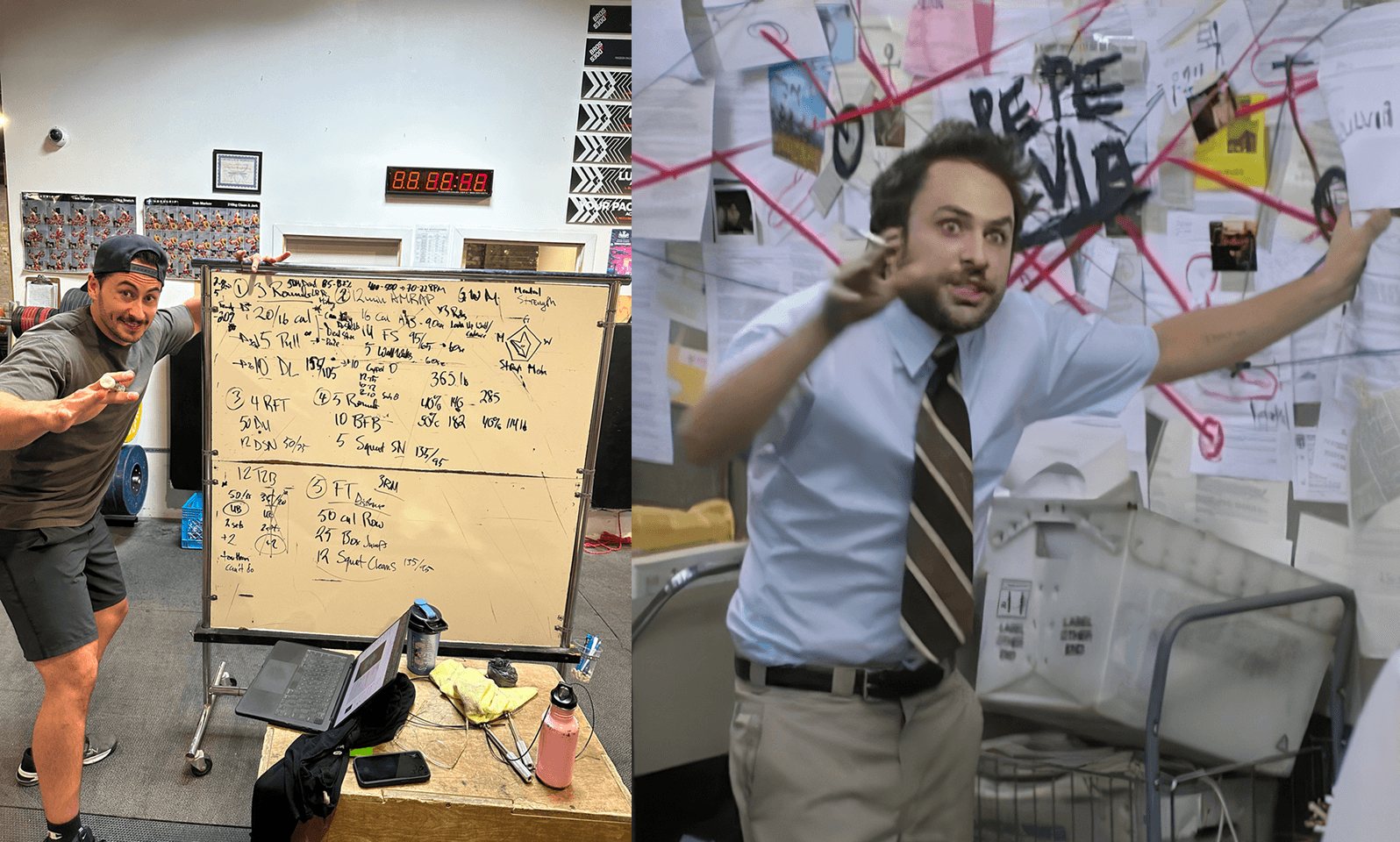
Fast iteration without losing control of the experience.
The product was designed and built using Bolt.new, with support from Claude. Figma was used selectively to define UI components and guide specific changes.
The workflow was iterative:
This allowed for fast iteration while maintaining control over the experience.
I built a data pipeline for the client to view the quiz leads and results.
The quiz went through multiple versions as the client’s offering evolved. We tested the flow dozens of times, refining question clarity, scoring accuracy, and overall usability. Each pass brought the quiz closer to how athletes actually think about their performance.
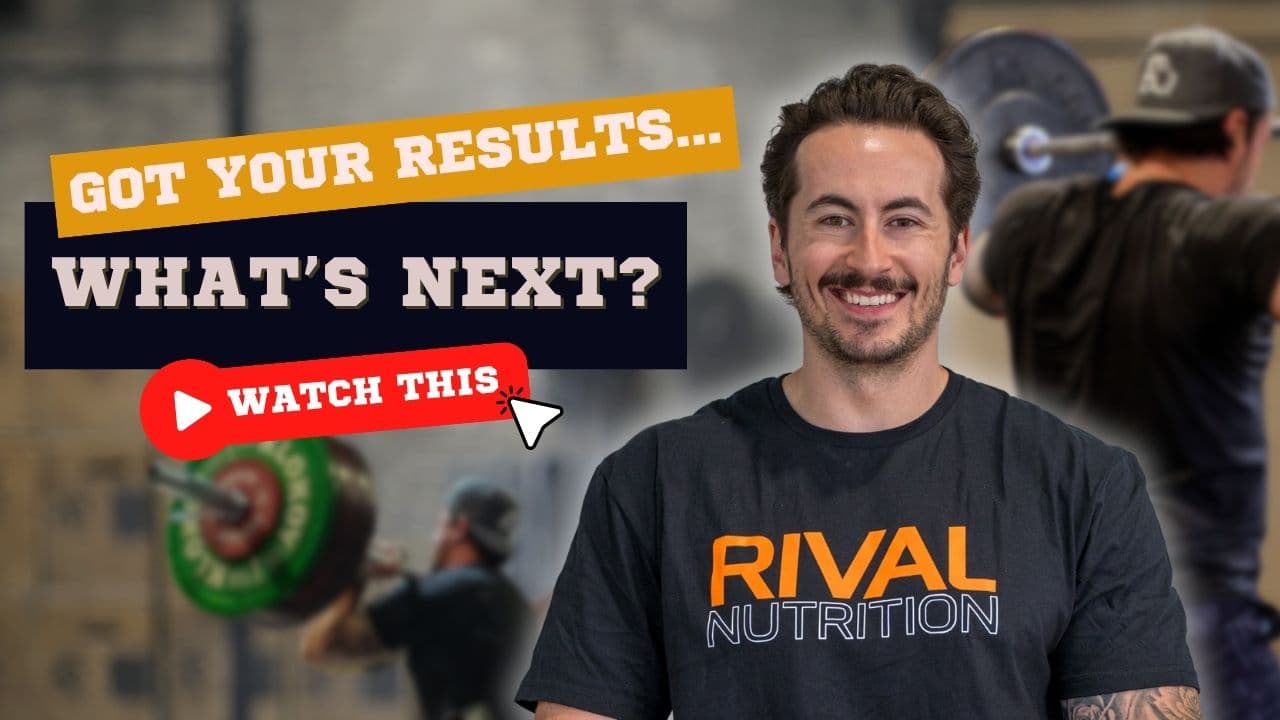
Tracking what matters to optimize what comes next.
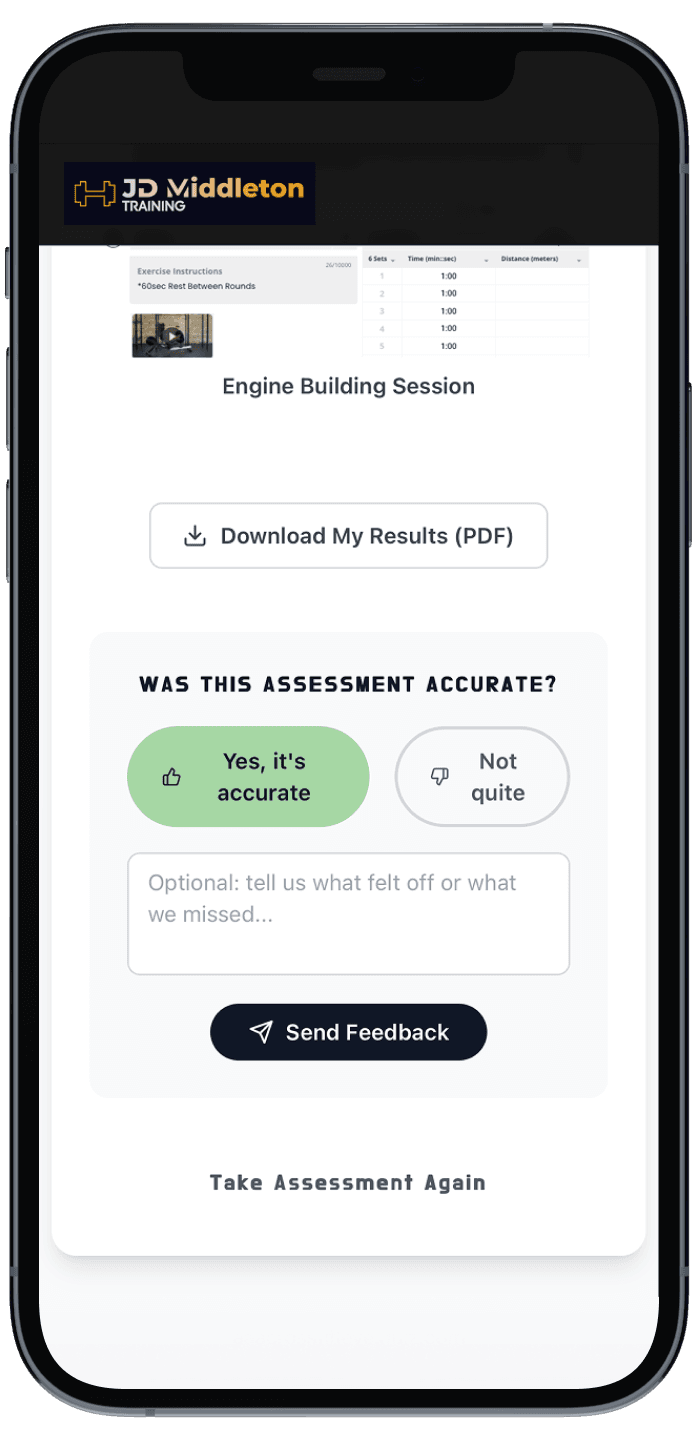
I built in lightweight analytics (Google Analytics and Microsoft Clarity) to track both behavior and perceived accuracy.
The goal isn’t just to get users through the quiz — it’s to understand:
The more analytics I can gather over time, the more I can optimize the funnel.
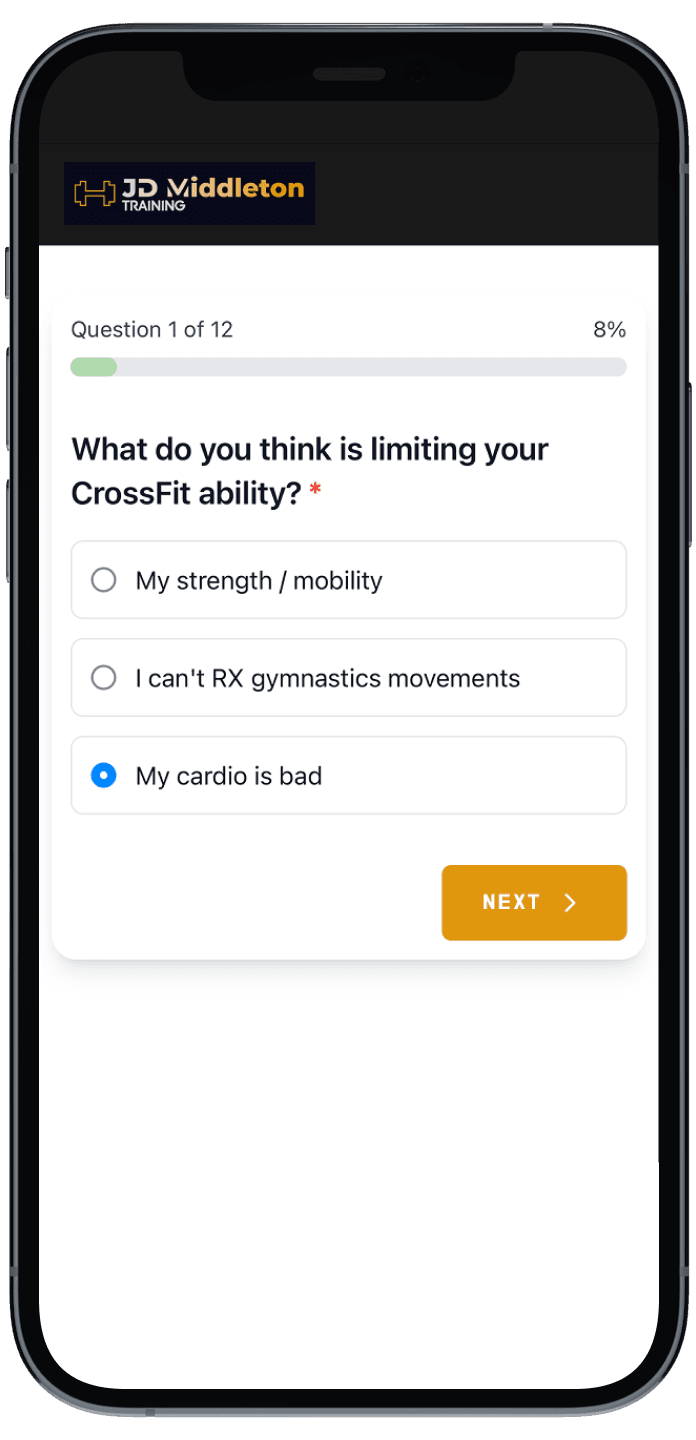
The quiz launched on April 12, 2026.
Early results suggest strong engagement, with clear opportunities to improve conversion at the results stage. The next phase is optimization.